
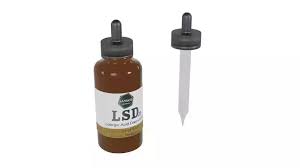
Where can I Buy LSD Powder Online Australia Safely?
Where can I Buy LSD Powder Online Australia Safely? Lysergic acid diethylamide (LSD), commonly known as acid, stands as one of the most potent and culturally significant psychoactive substances ever discovered. Synthesized in the late 1930s and accidentally found to have profound mind-altering effects in the 1940s, LSD journeyed from a pharmaceutical research lab to the heart of the 1960s counterculture, faced prohibition and stigma, and has now re-emerged in the 21st century as a subject of serious scientific inquiry for mental health treatment. This article explores its full history in detail, drawing on scientific, cultural, and medical contexts.
The Scientific Origins: Ergot and Early Research ( Where to buy real LSD online Australia)
LSD’s story begins with ergot, a fungus (Claviceps purpurea) that grows on rye and other grains. Historically linked to outbreaks of ergotism (St. Anthony’s Fire), which caused hallucinations, convulsions, and gangrene in medieval Europe, ergot also yielded valuable medicinal compounds. In the early 20th century, pharmaceutical companies sought to harness its alkaloids for medical use, particularly in obstetrics to control bleeding after childbirth.
Swiss chemist Albert Hofmann (1906–2008) joined Sandoz Laboratories in Basel in 1929 after earning his doctorate from the University of Zurich. Working under Arthur Stoll, he focused on isolating and synthesizing ergot derivatives. On November 16, 1938, as the 25th substance in a series of lysergic acid compounds, Hofmann synthesized lysergic acid diethylamide (LSD-25). Initial animal tests showed it caused restlessness in some models, but it lacked the desired analeptic (respiratory and circulatory stimulant) properties, so it was set aside.
Five years later, on April 16, 1943, Hofmann revisited LSD-25. While synthesizing a fresh batch, he accidentally absorbed a tiny amount—likely through his skin—and experienced unusual sensations. He described restlessness, dizziness, and a “dreamlike state” with closed eyes featuring “an uninterrupted stream of fantastic pictures, extraordinary shapes with intense, kaleidoscopic play of colors.” Suspecting the compound, he intentionally ingested 250 micrograms (a substantial dose) on April 19, 1943—now celebrated as “Bicycle Day.” As he bicycled home, the effects intensified dramatically: perceptual distortions, time dilation, and profound hallucinations. His lab assistant helped him home during what became the first intentional LSD trip. Where can I Buy LSD Powder Online Australia Safely?
Hofmann reported his findings to Sandoz. The potency was astonishing: effective in microgram doses, far lower than other known substances. By 1947, Sandoz began marketing LSD as Delysid for psychiatric research, supplying it to investigators worldwide. It was investigated as a tool to model psychosis and potentially treat conditions like alcoholism, anxiety in terminal illness, and other disorders.
Early Medical Research and Promise (1940s–1960s) ( Legit LSD powder vendors Brisbane)
In the post-WWII era, LSD research exploded. Over a thousand scientific papers appeared in the following decades. Psychiatrists used it in “psycholytic” (low-dose) or “psychedelic” (high-dose) therapy to facilitate emotional breakthroughs, enhance insight, and treat addiction. Humphry Osmond and Abram Hoffer in Canada explored it for alcoholism, reporting promising results with patients achieving sobriety after profound experiences. In the U.S., researchers like Oscar Janiger studied creativity enhancement, while others examined its effects on schizophrenia (as a model) or end-of-life anxiety.
Sandoz distributed free samples, accelerating adoption. By the 1950s, LSD was used in over a thousand studies involving tens of thousands of subjects. Some reports suggested efficacy for depression, anxiety, and obsessions, though methodologies varied and controls were often lacking by modern standards.
However, parallel secretive research complicated the picture. The U.S. CIA’s MKUltra program (1953–1973), led by Sidney Gottlieb, sought mind-control applications amid Cold War fears. The agency purchased much of the world’s LSD supply and conducted unethical experiments—often without consent—on prisoners, mental patients, soldiers, and civilians, sometimes in social settings. These included dosing unwitting subjects, with tragic outcomes like the death of Frank Olson. MKUltra’s exposure in the 1970s damaged LSD’s reputation irreparably in the public eye.
The Counterculture Explosion and Backlash (1960s) ( Safe ways to buy LSD acid online Australia)
LSD escaped the lab into broader society. Figures like Timothy Leary, a Harvard psychologist, popularized it through the slogan “Turn on, tune in, drop out.” Leary’s experiments at Harvard (with Richard Alpert, later Ram Dass) and later activities at Millbrook promoted it as a consciousness-expanding tool. Ken Kesey and the Merry Pranksters’ Acid Tests in California turned it into a communal, performative experience, documented in Tom Wolfe’s The Electric Kool-Aid Acid Test.
Owsley Stanley (“Bear”) produced high-quality LSD, supplying the Grateful Dead and San Francisco’s Haight-Ashbury scene. LSD influenced 1960s music (The Beatles’ Sgt. Pepper, Jimi Hendrix, Pink Floyd), art (psychedelic posters, light shows), and fashion. It became intertwined with anti-war protests, civil rights, and the hippie movement, symbolizing rebellion against conformity.
Media hype, both positive and sensationalized (stories of “bad trips,” chromosome damage—later debunked), fueled concern. States began banning it in the mid-1960s. In 1966, Sandoz stopped U.S. distribution. The U.S. classified LSD as Schedule I in 1968 (high abuse potential, no accepted medical use), effectively halting most research. Similar prohibitions followed globally. Hofmann expressed disappointment, viewing LSD as a tool for insight misused recreationally.
Decline, Underground Persistence, and Stagnation (1970s–1990s) ( Purchase LSD crystals online Melbourne)
Post-ban, legitimate research nearly vanished. Underground use continued at lower levels, with periodic revivals in club scenes (e.g., 1990s acid house and raves). Therapeutic advocates like Stanislav Grof preserved knowledge through books and limited legal work abroad. Public perception equated LSD with danger, flashbacks, and psychosis, despite evidence showing low physical toxicity and addiction potential.
The Modern Research Revival (2000s–Present) ( Order pure LSD powder Sydney)
The 21st-century “psychedelic renaissance” began with psilocybin studies at Johns Hopkins and elsewhere around 2006, but LSD research has also returned. Improved study designs, neuroimaging, and a mental health crisis have driven interest. LSD’s long duration (8–12 hours) makes it logistically challenging compared to psilocybin, but its potency and unique profile (strong 5-HT2A receptor agonism, influencing serotonin systems and neuroplasticity) offer therapeutic promise.
Key modern developments:
- Anxiety and Depression: Trials, including those by MindMed with MM120 (a tartrate form of LSD), showed a single 100-microgram dose significantly reduced generalized anxiety disorder symptoms, with effects lasting weeks. FDA granted Breakthrough Therapy designation in 2024.
- End-of-Life and Other Conditions: Earlier revival studies (e.g., 2010s) found LSD-assisted therapy reduced anxiety in terminal patients, with lasting benefits up to a year. Ongoing research explores alcohol use disorder, cluster headaches, and neuroplasticity.
- Mechanisms: fMRI studies reveal LSD decreases default mode network activity (linked to ego and rumination), increases global connectivity, and promotes brain-derived neurotrophic factor (BDNF) for neuroplasticity—potentially explaining rapid, enduring changes.
Challenges remain: scheduling hurdles, stigma, the need for controlled settings with trained therapists, and questions of scalability. Companies like MindMed are advancing pharmaceutical formulations. Larger Phase 3 trials are underway or planned, with results expected in coming years that could pave the way for approval.
Cultural Legacy and Lessons ( Is it legal to buy LSD powder online in Australia)
LSD profoundly shaped modern culture—from Silicon Valley microdosing anecdotes to ongoing artistic inspiration. It highlighted tensions between personal freedom, scientific exploration, and societal control. Albert Hofmann lived to see the revival, advocating responsible use until his death in 2008. He called LSD a “medicine for the soul” when used properly.
Today, research emphasizes set and setting: mindset and environment are crucial for positive outcomes. Unlike recreational use, clinical protocols involve preparation, guided sessions, and integration.
Conclusion: A Full Circle? (Online drugstores shipping psychedelics to Australia)
From Hofmann’s bicycle ride to today’s controlled trials, LSD’s history reflects humanity’s complex relationship with consciousness-altering substances. Banned amid cultural upheaval, it is now studied with renewed rigor for its potential to address treatment-resistant mental health issues. While not a panacea, evidence suggests carefully administered LSD can facilitate profound psychological shifts. As research advances, society must balance risks, benefits, and ethics—learning from past mistakes to harness its properties responsibly. Where can I Buy LSD Powder Online Australia Safely??
The future may see LSD (or derivatives) integrated into psychiatry, much like early pioneers envisioned—offering not escape, but insight. With ongoing trials and destigmatization efforts, the next chapter could fulfill some of its original therapeutic promise.
